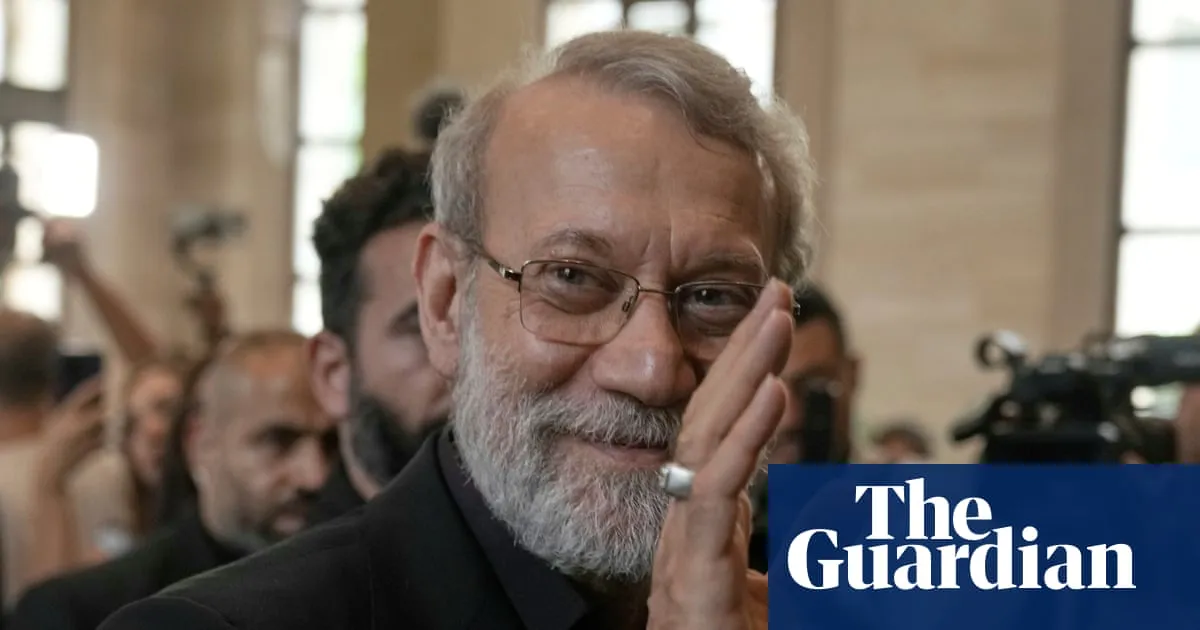
Ali Larijani, a prominent figure in Iranian politics and former Secretary of Iran’s Supreme National Security Council, was assassinated in an Israeli air strike on Tehran on March 17, 2026, at the age of 67. His death is considered a significant loss for the Iranian regime, comparable to the assassination of Qassem Suleimani.
Born on June 3, 1957, in Najaf, Iraq, Larijani completed his undergraduate studies in computer science at Sharif University of Technology and later obtained a doctorate in philosophy from the University of Tehran. He served as head of the state media corporation IRIB from 1994 to 2004 and was a commander in the Islamic Revolutionary Guard Corps (IRGC) starting in 1982.
Larijani’s political career spanned over four decades, during which he was seen as a crucial figure during the transition after the assassination of Supreme Leader Ali Khamenei. He was widely regarded by observers as the ‘man of the moment’ in Iranian politics.
Throughout his career, Larijani was an advocate of a nuclear deal with the United States, which positioned him as a key player in Iran’s international relations. However, he faced political challenges, including being debarred from standing in the 2021 and 2024 presidential elections by the Guardian Council.
His assassination has raised concerns about the stability of the Iranian leadership, as Larijani would have been a prime target in any attempt to decapitate the Iranian leadership. “Their martyrdom still feels surreal to me,” he once remarked, reflecting on the weight of political loss in Iran.
Larijani’s legacy includes his belief that “society has an existential identity separate from the individual,” a perspective that shaped his approach to governance and policy.
Details remain unconfirmed regarding the broader implications of his assassination on Iran’s political landscape and its relations with Israel.