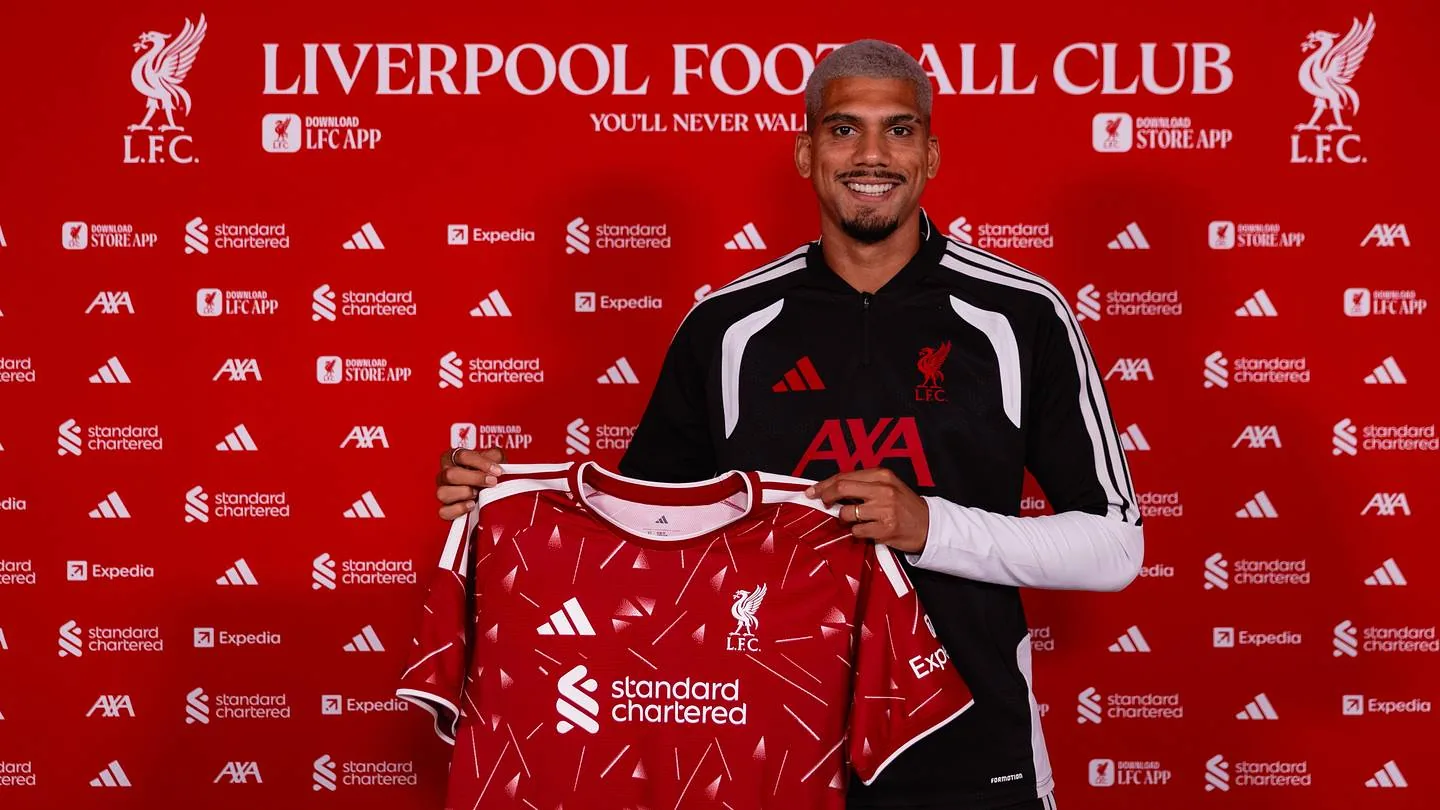
Liverpool has reached its limit for non-homegrown players following the loan signing of defender Ronald Araujo from Barcelona. The move for Araujo, who arrives at Anfield for the 2026–27 season, marks the 17th senior non-homegrown player for the club, effectively filling all available slots under Premier League regulations.
The Premier League mandates that clubs submit a squad list of no more than 25 senior players. Within this list, a maximum of 17 players can be classified as non-homegrown. A player is considered homegrown if they have been affiliated with any English or Welsh club for a period of three entire seasons or 36 months before their 21st birthday, regardless of their nationality or age. Under-21 players are not included in these 25-man squad lists.
Araujo’s arrival means that any further non-homegrown additions would necessitate another non-homegrown player leaving the club. This situation is particularly relevant as Liverpool is reportedly also pursuing French winger Bradley Barcola from Paris Saint-Germain, suggesting a potential one-in, one-out scenario at Anfield for non-homegrown players.
Araujo’s move to Anfield
The loan deal for Ronald Araujo caught many by surprise due to its swift execution. The towering defender’s move to Anfield includes an option for Liverpool to make the deal permanent next summer for a fee of $63.5 million (£47 million). This arrangement allows new Reds manager Andoni Iraola to integrate the Uruguayan into the squad as the 2026–27 Premier League season approaches.
Iraola had reportedly been seeking a new center-back, especially after Joe Gomez’s injury left him with limited senior options during much of the preseason. While some fans might have anticipated a high-cost signing, Liverpool opted for a loan deal, avoiding overspending on a player whose exact role in the first team is not yet certain. The club already has Virgil van Dijk as a guaranteed starter when fit, and 21-year-old Jérémy Jacquet, who joined for $82 million (£60 million), is also expected to feature prominently. Additionally, Giovanni Leoni, 19, is seen as a promising talent for the future once he recovers from an ACL injury.
Liverpool’s decision to pursue a loan for Araujo provides flexibility, offering either regular starts, reliable cover, or a combination of both, without blocking the development pathways for younger talents like Jacquet or Leoni. The move is considered a calculated gamble, as Araujo arrives at Liverpool during a challenging period in his career, having faced struggles at Barcelona under Hansi Flick, dealing with fan criticism for errors, and managing fitness issues.
Impact on Barcelona and future prospects
For Barcelona, the loan of Ronald Araujo offers significant financial relief. Araujo was reportedly one of the top earners at Camp Nou, and his limited playing time under Flick made his wages a considerable burden. Liverpool will cover his entire salary during the loan period, and reports suggest Araujo agreed to a wage cut to facilitate the move. This financial flexibility is crucial for Barcelona, particularly in navigating La Liga’s spending regulations and potentially pursuing other transfer targets.
Araujo’s departure is not expected to significantly impact Barcelona’s immediate defensive options, as he reportedly fell to fifth in the pecking order, starting only 11 La Liga games last year. The club hopes that Liverpool will either activate the purchase clause next summer or that Araujo’s performance at Anfield will showcase his value to other teams, leading to a permanent exit. The financial benefits of offloading his wages are substantial, making potential pursuits of players like Manchester City’s Rodri and Atlético Madrid’s Julián Alvarez more feasible.
The loan deal is seen as mutually beneficial. Liverpool secures a needed center-back, Barcelona addresses wage budget concerns, and Araujo gains a fresh start after what have been described as mentally challenging seasons in Catalonia. While the pressure on Araujo at Liverpool may not be entirely lighter than at Barcelona, the change of environment and potentially reduced expectations as a squad player could allow him to regain his form. Next summer, the option to buy will either prove to be a bargain or provide an opportunity for both parties to move in different directions.
The 2026–27 Premier League season is fast approaching, and Liverpool’s squad is now set with its non-homegrown player limit reached.
Source: bbc.co.uk