Introduction
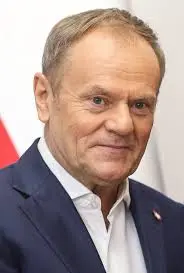
The role of the Polish Prime Minister has gained international attention amid shifting political landscapes in Europe. As the head of government, the Prime Minister plays a crucial role in shaping domestic and foreign policies that impact not only Poland but also its relations with the European Union and neighbouring countries. With recent elections and various socio-economic challenges, the significance of this position has never been more pronounced.
Recent Developments
The current Polish Prime Minister, Mateusz Morawiecki, representing the Law and Justice Party (PiS), has been at the forefront of Poland’s political scene since 2017. Recently, Poland held parliamentary elections in October 2023, resulting in a surprising shift in the political landscape. The ruling PiS party lost its parliamentary majority, leading to coalition talks among opposition parties. This shift may herald a new direction for Poland’s domestic initiatives and European policies.
Under Morawiecki’s leadership, the government has focused on economic growth and social welfare reforms, including a controversial judiciary overhaul that drew criticism from EU officials. Despite these efforts, the economic ramifications of the COVID-19 pandemic and ongoing inflation have presented significant challenges. The Prime Minister has pledged to navigate these turbulent waters, citing the importance of stability and continued investment.
Key Challenges Ahead
As political discussions unfold, Morawiecki faces the daunting task of leading a potentially fragmented government while addressing pressing issues such as rising living costs and immigration policy. With the EU instigating proceedings over rule-of-law concerns, maintaining a delicate balance between preserving Poland’s independence and adhering to EU guidelines will be a significant focus for the incoming government.
Furthermore, Poland’s stance on NATO and the ongoing conflict in Ukraine will require diplomatic finesse. The Prime Minister has been a staunch advocate for Ukraine, often emphasising Poland’s role in providing military assistance and support to Ukrainian refugees.
Conclusion
As the political situation develops, the upcoming months will be crucial for the Polish Prime Minister and indeed the future of Polish politics. With potential coalition-building and the necessity for dialogue with various factions, the Prime Minister’s ability to unite will fundamentally determine how effectively the new government can navigate the complexities of both domestic and international challenges. Observers will be keen to see if this marks a significant pivot in Polish politics, shifting towards more collaborative governance amidst broader European trends.