Introduction
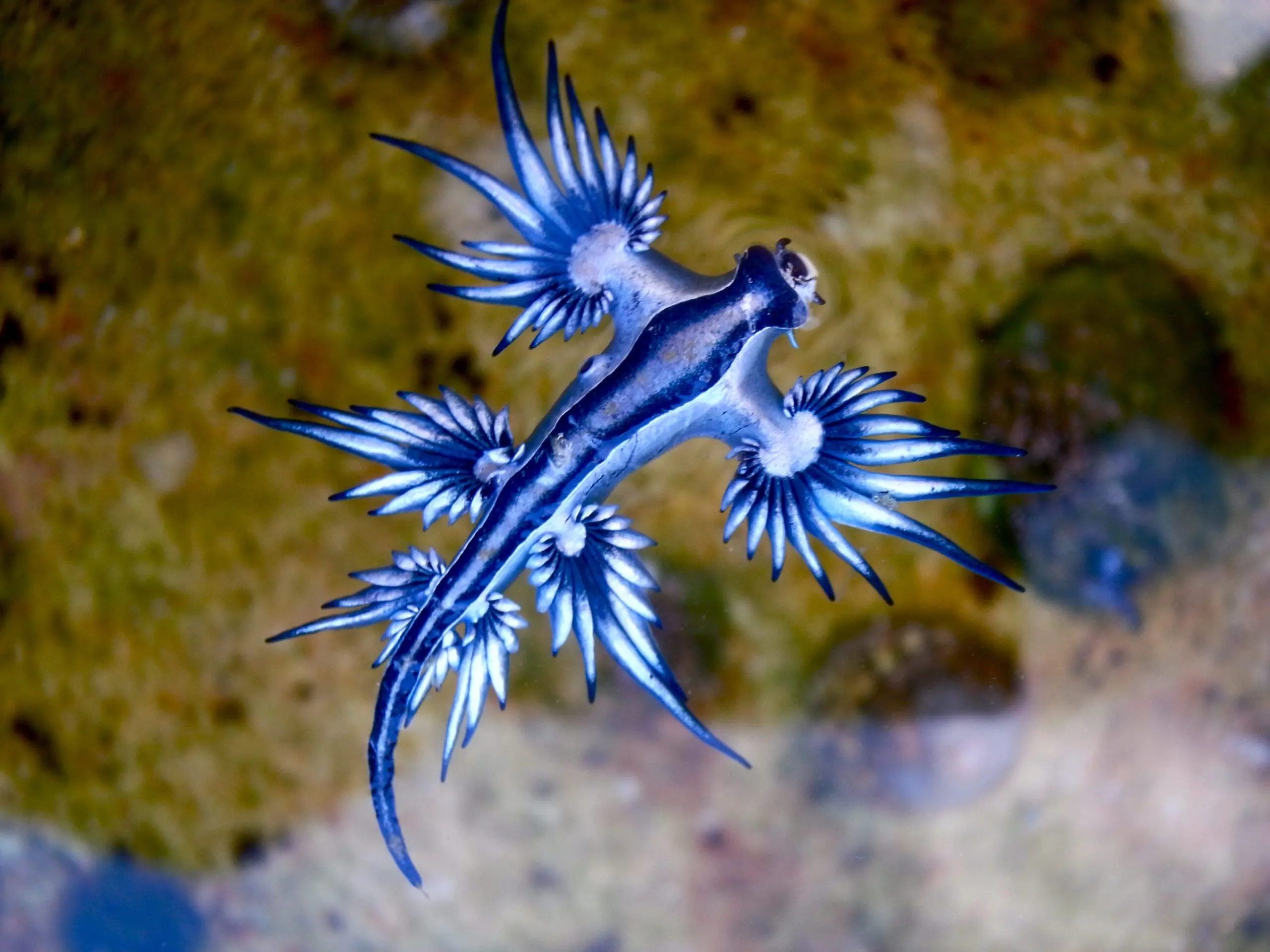
The blue dragon sea slug, scientifically known as Glaucus atlanticus, is a strikingly beautiful marine creature that has captured the imagination of ocean enthusiasts and researchers alike. This diminutive yet vibrant slug, belonging to the family of blue sea slugs, is not only notable for its stunning appearance but also for its unique ecological role in the underwater ecosystem. Given the increasing interest in marine biodiversity and conservation, understanding the blue dragon sea slug becomes vital for environmental awareness and preservation efforts.
The Species and Its Habitat
Blue dragon sea slugs are typically found in warm ocean waters, frequently drifting along the Atlantic, Indian, and Pacific Oceans. They measure about 3-4 cm in length and are characterised by their striking blue coloration, which serves both as a beautiful display and a form of camouflage against predators. These slugs are often found floating on the ocean’s surface, utilising a gas-filled sac in their bodies for buoyancy. They primarily inhabit areas with warm currents, including coastal waters and the open ocean.
Diet and Behaviour
These fascinating creatures are carnivorous, feeding mostly on small jellyfish like the Portuguese man o’ war, Physalia physalis. They have developed a unique adaptation: after consuming the stinging tentacles of their prey, they can store the stinging cells in their own tissues. This enables the blue dragon sea slug to use these cells as a defence mechanism against predators, thus making them more formidable despite their size. Furthermore, they exhibit fascinating behaviour, whereby they can often be found in groups, drifting together in ocean currents.
Conservation Status
While the blue dragon sea slug itself is not currently listed as endangered, its habitat faces significant threats due to climate change, pollution, and human activity. Rising ocean temperatures and increasing plastic waste are detrimental to not just the blue dragon but also to the entire marine ecosystem. Conservationists are calling attention to the importance of protecting marine environments to ensure the survival of various species, including the blue dragon sea slug.
Conclusion
The blue dragon sea slug is a remarkable symbol of marine biodiversity and highlights the beauty and complexity of ocean life. As researchers continue to study these creatures, it becomes increasingly clear that they play an essential role in their ecosystem. The challenges they face serve as a reminder of the fragile balance of marine environments and the need for ongoing conservation efforts. Understanding and protecting such unique species revitalises our commitment to preserving the world’s oceans for future generations.