Introduction
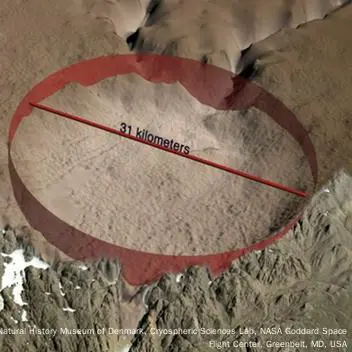
Asteroid craters have long been a subject of fascination among scientists and the general public alike. These geological formations serve as essential indicators of both past cosmic events and the evolutionary history of our planet. Studying asteroid craters not only helps us understand the origins of Earth but also provides insights into the potential threats posed by near-Earth objects.
Recent Discoveries and Research
Recent research has shed light on several significant asteroid craters around the globe, adding depth to our understanding of Earth’s geological timeline. For instance, in 2021, scientists discovered a previously unknown impact crater estimated to be around 500 million years old in Canada. Named the Manicouagan Crater, this site provided new evidence about the possible effects of asteroid impacts on Earth’s biosystems during the Paleozoic era.
Another significant finding is the Chicxulub Crater, located in Mexico, which has been linked to the mass extinction event that wiped out the dinosaurs approximately 66 million years ago. Ongoing studies at this site continue to reveal details about the environmental changes that followed this catastrophic event, demonstrating how asteroid impacts can significantly affect life on Earth.
Scientific Importance
The study of asteroid craters extends beyond historical analysis; it has current implications as well. The exploration of craters enhances our understanding of planetary defense mechanisms against future asteroid threats. In 2022, NASA launched the Double Asteroid Redirection Test (DART) mission, which successfully altered the trajectory of a small asteroid. The success of this mission highlights the feasibility of using similar techniques to create a protective shield for Earth against potential asteroid impacts.
Moreover, scientists are continually developing advanced technologies, including detailed satellite imaging and ground-penetrating radar, to analyse the characteristics of craters in greater detail. This aids in the accurate dating of impacts and their geological consequences, as well as the elucidation of the composition of asteroids.
Conclusion
The relevance of asteroid craters is profound and multifaceted. As we deepen our understanding of these formations, we not only gain insights into our planet’s history but also improve our ability to predict and mitigate the threats posed by future asteroid impacts. Continued investment in research and technology is crucial for effective planetary defense and for expanding our knowledge of the universe. As space exploration continues to evolve, it’s clear that asteroid craters will remain a pivotal area of study for scientists and a serious consideration for Earth’s future.