Importance of the Issue
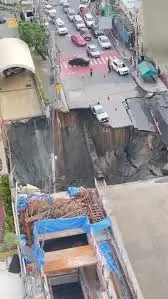
The recent appearance of a massive sinkhole in Bangkok has sparked significant concern among residents and city officials alike. As urban centres continue to grow, issues related to infrastructure stability and geological safety have become more pressing. Such sinkholes not only pose immediate risks to public safety but also indicate underlying problems that could have broader implications for urban planning and development.
Details of the Sinkhole Incident
The sinkhole, measuring approximately 15 metres in diameter, was first reported on October 20, 2023, in the bustling area of Ratchaprasong. Local authorities have stated that the sinkhole opened suddenly in the middle of the road, creating chaos as vehicles were forced to divert and pedestrians were advised to maintain a safe distance. No injuries have been reported, but the incident has left many residents shaken and wondering about the safety of their surroundings.
Initial investigations suggested that heavy rains, which have inundated the city in recent weeks, may have exacerbated pre-existing weaknesses in the soil. This flooding, coupled with years of urban expansion and the pressure of road traffic, has raised serious questions regarding the resilience of Bangkok’s infrastructure to withstand such environmental challenges, especially given the city’s geographical predisposition to sinkholes.
Government Response and Future Implications
In response to this incident, the Bangkok Metropolitan Administration has embarked on assessment procedures while promising to enhance urban planning measures to prevent future occurrences. City officials have engaged with geological experts to conduct a thorough evaluation of the area and its surrounding infrastructures, particularly focusing on drainage systems and soil integrity.
This incident serves as a wake-up call not only for Bangkok but for urban centres worldwide that face similar challenges. With increasing urbanisation and climate change impacting weather patterns, cities may need to rethink their development strategies, prioritising robustness and sustainability in their infrastructure.
Conclusion
While the immediate threat posed by the massive sinkhole has been contained and no injuries reported, the situation underscores the urgent need for cities like Bangkok to invest in infrastructure resilience. Evaluating the city’s vulnerability to geotechnical disasters will be crucial in averting future emergencies. With evolving climate conditions, urban planners and policy-makers must forge new pathways towards a safer, more sustainable urban living environment.