Introduction: What is Interstellar Comet 3i ATLAS?
Interstellar comets such as 3i ATLAS continue to intrigue astronomers and scientists alike as they traverse the solar system. Discovered in 2019, 3i ATLAS is significant for understanding the origins and composition of these cosmic travelers, offering a unique glimpse into the materials from other star systems. Its passage not only enhances our knowledge of celestial mechanics but also provides opportunities for breakthroughs in astronomical research.
Discovery and Characteristics of 3i ATLAS
The comet 3i ATLAS was identified by astronomers using the Asteroid Terrestrial-impact Last Alert System (ATLAS) on December 22, 2019. It is classified as an interstellar object (ISO), marking it as one of the first comets discovered that originates from outside our solar system. Initial observations suggest that it measures approximately 100—200 meters in diameter, with a highly eccentric orbit that indicates a hyperbolic trajectory. This means it is not bound to our sun and will exit the solar system after its short visit.
Journey Through the Solar System
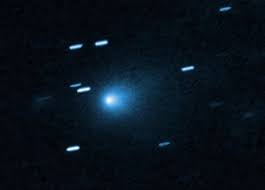
3i ATLAS peaked in brightness around May 2020, as it approached its perihelion—its closest point to the sun—on May 31, 2020. This brought about a flurry of observational opportunities for astronomers across the globe. As 3i ATLAS traveled through the solar system, telescopes including the Hubble Space Telescope and various ground-based observatories eagerly recorded its path, gathering valuable data about the comet’s composition and behaviour. Analysing its tail and coma has provided insights into the surface materials that make up this interstellar body, information crucial for understanding the diverse characteristics of ISOs.
Scientific Significance and Future Research
The study of interstellar comets like 3i ATLAS holds immense value for planetary scientists and astrobiologists alike. Comets are often referred to as time capsules, preserving the primordial components that formed solar systems. Understanding ISOs helps scientists piece together the dynamic processes of solar system formation. Moreover, as mankind looks toward eventual interstellar travel, insights gained from these objects could one day inform missions to other stars.
Conclusion: A Cosmic Reminder
The passage of interstellar comet 3i ATLAS serves as a captivating reminder of our place in the universe. With its unique properties and origins, it challenges our understanding of the solar system and invites curiosity among scientists and enthusiasts. As further observations arise, 3i ATLAS will continue to contribute robustly to our understanding of interstellar phenomena, highlighting the importance of ongoing astronomical research.