Introduction
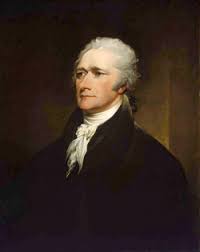
Alexander Hamilton, one of the most influential Founding Fathers of the United States, played a pivotal role in establishing the financial foundations of the nation. His contributions as a statesman, writer, and architect of American capitalism remain relevant today, as discussions around financial policy and government structure echo his innovative ideas.
Significant Contributions
Born on January 11, 1755, in Charlestown, Saint Kitts, Hamilton’s early life was marked by hardship. Rising from humble beginnings, he became an aide-de-camp to General George Washington during the Revolutionary War. His keen intellect and understanding of economics quickly propelled him to prominence.
As the first Secretary of the Treasury from 1789 to 1795, Hamilton laid the groundwork for the American financial system. He advocated for the assumption of state debts by the federal government and the establishment of a national bank, thereby solidifying the federal government’s power and credibility. His financial plan introduced tariffs and excise taxes, which were instrumental in creating a stable economic environment.
Political Philosophy
Hamilton’s political philosophy leaned towards a strong central government, contrasting sharply with his contemporary Thomas Jefferson, who championed states’ rights and agrarian ideals. Hamilton’s Federalist Paper arguments, particularly Federalist No. 10 and No. 51, advocated for a system of checks and balances that would prevent any one faction from gaining too much power. These writings remain a cornerstone of American political theory.
Enduring Legacy
Hamilton’s life was tragically cut short when he was killed in a duel with Aaron Burr in 1804. However, his legacy endures through various aspects of modern-day governance and economic theory. The recent resurgence of interest in Hamilton, particularly through popular culture—most notably the Broadway musical “Hamilton”—has brought his story and contributions to a new generation.
Conclusion
In conclusion, Alexander Hamilton’s extraordinary journey from an impoverished youth to a key architect of the United States’ foundational institutions is a testament to his intellect, ambition, and vision. As current discussions around government structure, economic policy, and national unity continue, Hamilton’s insights offer valuable lessons for contemporary society. Understanding his role helps illuminate the complexities of America’s ongoing struggle with governance and economic stability.