Introduction
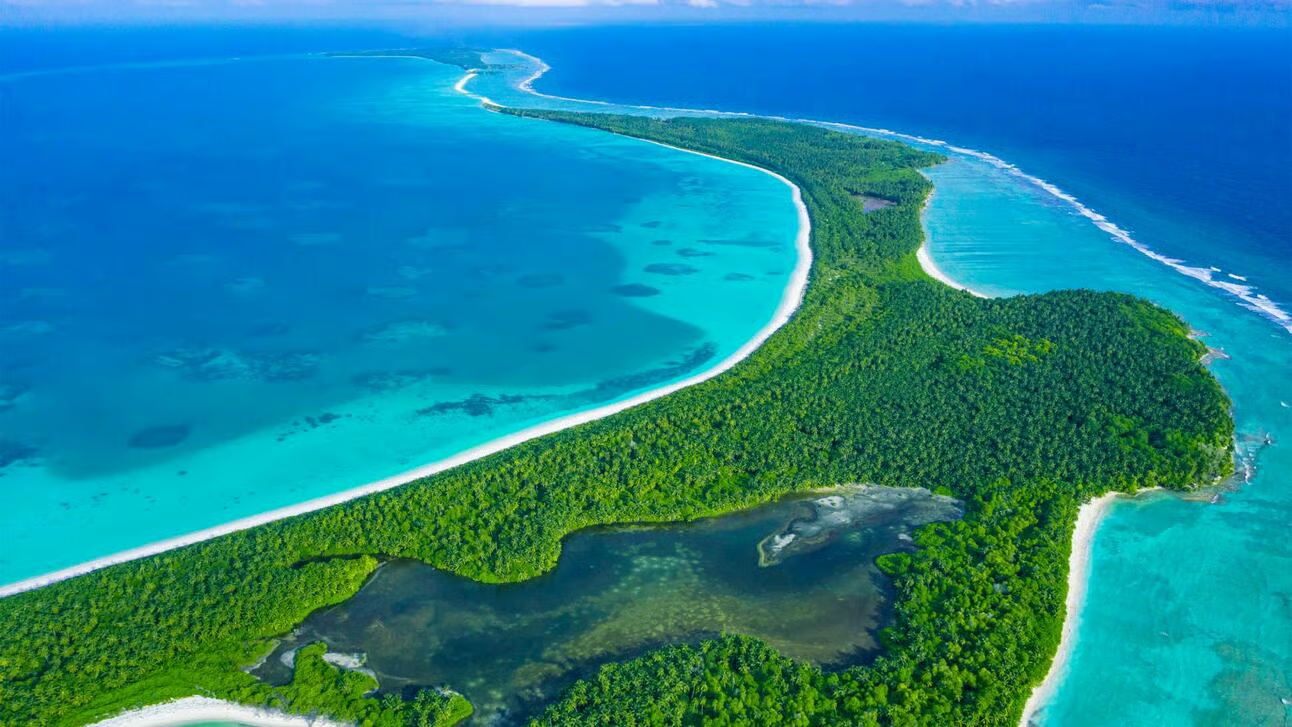
The Chagos Islands, a small archipelago in the Indian Ocean, hold significant geopolitical importance for the United Kingdom and the United States. Situated about 1,000 miles south of India, the islands are home to Diego Garcia, a critical military base for American operations in the region. The controversy surrounding the islands is rooted not only in their strategic value but also in the ongoing discussions about the rights of the Chagossian people who were forcibly removed from their homeland in the 1960s and 1970s.
Geopolitical Importance
The Chagos Islands were established as a British Indian Ocean Territory (BIOT) in 1965, primarily to facilitate the establishment of a military base on Diego Garcia. This base plays a pivotal role in the United States’ military strategy, particularly in terms of surveillance, logistics, and operations in the Middle East and Asia. The strategic location offers significant advantages for rapid deployment of military assets and has been a launch point for operations in Afghanistan and Iraq.
Human Rights Concerns
The islands’ significance extends beyond military strategy to serious human rights issues. The British government forcibly removed approximately 1,500 indigenous Chagossians between 1968 and 1973 to make way for the military base. The Chagossians were relocated to Mauritius and the Seychelles, where they faced poverty and deprivation. Legal battles ensued, with varying outcomes, but the UK government has maintained its stance to retain control over the islands, stating that the removal was necessary for security purposes.
Recent Developments
In recent years, there have been renewed calls for justice from Chagossian advocacy groups and human rights organisations. In August 2021, a British court ruled that the UK had not properly fulfilled its legal obligations towards the Chagossians. This ruling reignited international attention on the plight of the Chagossians and the ongoing dispute over their right to return. Moreover, discussions are ongoing regarding the sovereignty of the islands, particularly in the context of increasing tensions with countries like Mauritius and the potential implications for UK-US relations.
Conclusion
The Chagos Islands represent a complex fusion of military strategy and human rights issues. As global geopolitical dynamics evolve, how the UK addresses the past injustices faced by the Chagossians will likely remain a point of contention. For readers, understanding the significance of the Chagos Islands goes beyond military strategy—it encapsulates the broader challenges of colonial legacies and the fight for self-determination. The future of the Chagossians and the islands remains uncertain, but continued advocacy and international dialogue may offer pathways toward resolution. As such, the world will be watching closely as discussions on the fate of the Chagos Islands unfold.