Introduction
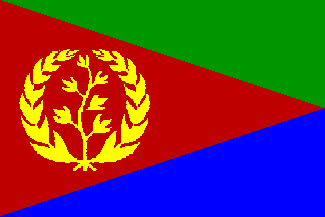
Eritrea, a small country located in the Horn of Africa, has been in the news for various reasons, including its enduring political scene, human rights issues, and regional dynamics. As one of the youngest countries in Africa, having gained independence from Ethiopia in 1993, Eritrea’s journey has been fraught with challenges. The importance of understanding Eritrea transcends its geographic boundaries as it represents a critical point in discussions about human rights, geopolitics, and migration in the region.
Political Climate and Governance
The government of Eritrea, led by President Isaias Afwerki, has faced ongoing criticism for its authoritarian regime. With no elections held since 1993, the political landscape has been tightly controlled. Recent reports highlight an increased crackdown on dissent, with thousands of political prisoners reportedly detained without trial. These actions have drawn the attention of human rights organisations, further complicating Eritrea’s international relationships.
Human Rights Concerns
Human rights violations in Eritrea have been a persistent issue, culminating in severe restrictions on free expression, assembly, and religion. The UN Commission of Inquiry on Eritrea reported widespread abuses, including forced conscription, torture, and arbitrary detentions. As these issues continue to gain international scrutiny, Eritrea finds itself isolated diplomatically, hampering potential economic aid and development.
Economic Challenges
The economy of Eritrea is heavily reliant on agriculture, which employs over 70% of the population. However, the ongoing challenges, including drought, mismanagement, and the impact of military conscription on workforce availability, hinder economic growth. According to the World Bank, GDP growth in Eritrea remains fragile, with many citizens facing food insecurity and high unemployment rates.
Regional Relations
Eritrea’s relationships with its neighbours have also been tumultuous. The peace agreement with Ethiopia in 2018 marked a significant shift, yet tensions remain, particularly with the ongoing conflict in Tigray. This situation poses a complex challenge for Eritrea, as regional instability can have rapid implications on security and refugee movements.
Conclusion
In conclusion, Eritrea’s current affairs reflect a nation grappling with internal challenges and external pressures. The issues surrounding governance, human rights, and economic development are not isolated; they intertwine with broader regional dynamics that impact East Africa. As international observers continue to monitor the situation, Eritrea’s potential for progress hinges on addressing these pressing concerns and fostering a more open and inclusive society.