Introduction
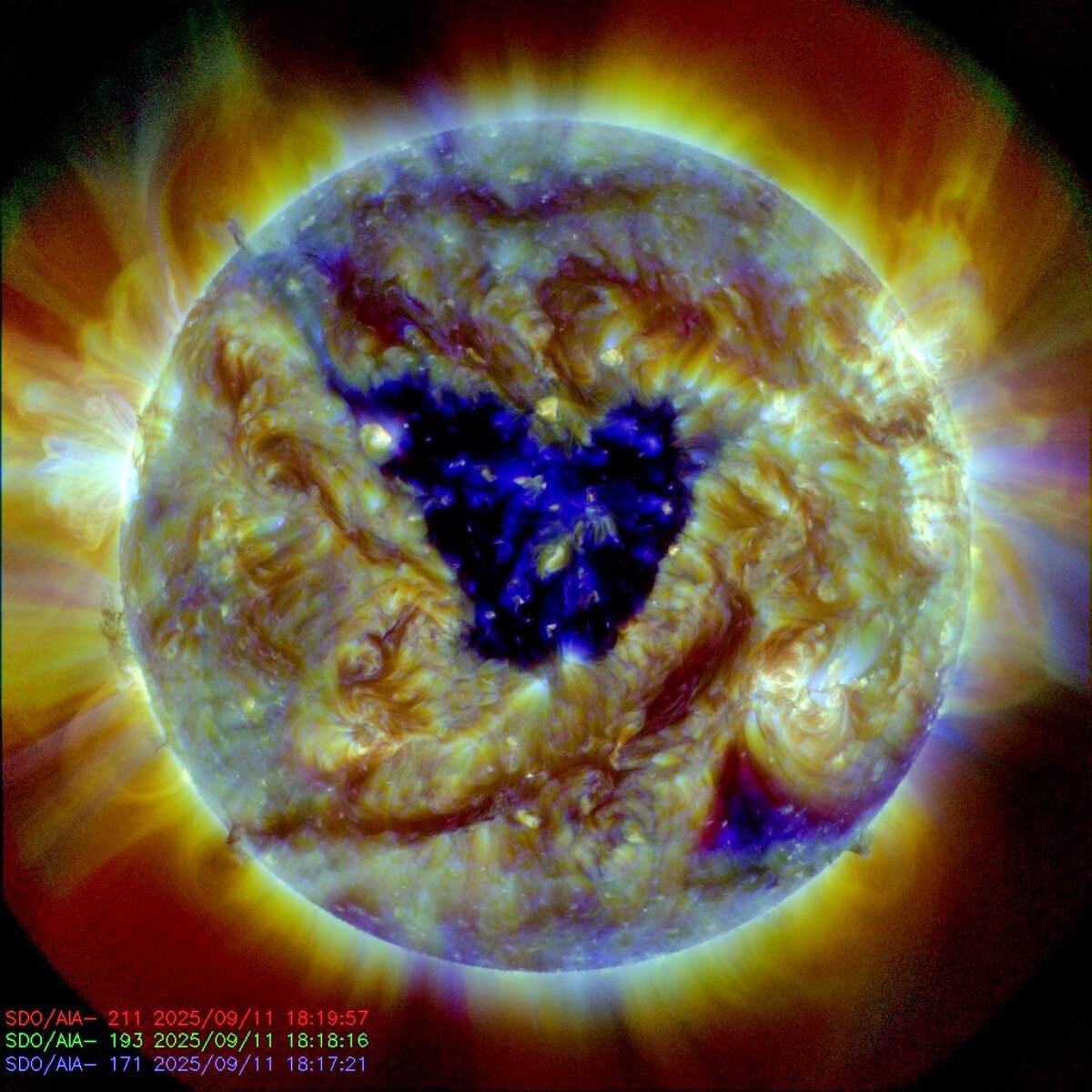
The recent discovery of a butterfly shaped hole on the Sun’s surface has sparked intrigue among solar scientists and enthusiasts. These holes, known scientifically as coronal holes, are areas where the solar corona is lower in density and temperature compared to surrounding regions. Understanding these features is vital, not only for solar physics but also for comprehending their impact on space weather and Earth’s atmosphere.
What Are Coronal Holes?
Coronal holes signify regions of the Sun where the magnetic field lines are open to space, allowing solar wind, a stream of charged particles, to escape more freely. These holes can vary in size and, on occasion, take on distinct shapes. The recent butterfly shaped formation has been prominent in scientific observations, drawing attention due to its unique outline that resembles the insect.
Recent Observations
NASA’s Solar Dynamics Observatory (SDO) has played a key role in monitoring solar activity and recorded images revealing the butterfly shaped hole. Observed in late September, the hole encompasses a significant portion of the Sun’s disk. Such formations often signify increased solar wind activity, potentially affecting satellite operations, navigational systems, and even power grids on Earth.
Scientific Significance
Studying coronal holes is crucial for forecasting space weather events. Coronal holes are associated with high-speed solar wind streams, which can lead to geomagnetic storms when they reach the Earth. These storms can result in beautiful auroras but can also disrupt communication and power systems. The butterfly shaped hole, specifically, has raised questions regarding its formation and longevity, prompting further investigation from astrophysicists.
Conclusion
The butterfly shaped hole on the Sun has not only grabbed the attention of scientists but also the general public’s interest in astronomical phenomena. As researchers continue to explore these intriguing formations, our understanding of the Sun’s behaviour and its effects on Earth improves markedly. Future studies may provide clearer insights into how such coronal features develop and sustain themselves, contributing to the broader knowledge of solar dynamics. Continued observation and research into such phenomena are imperative as our technological reliance on space-based systems grows.