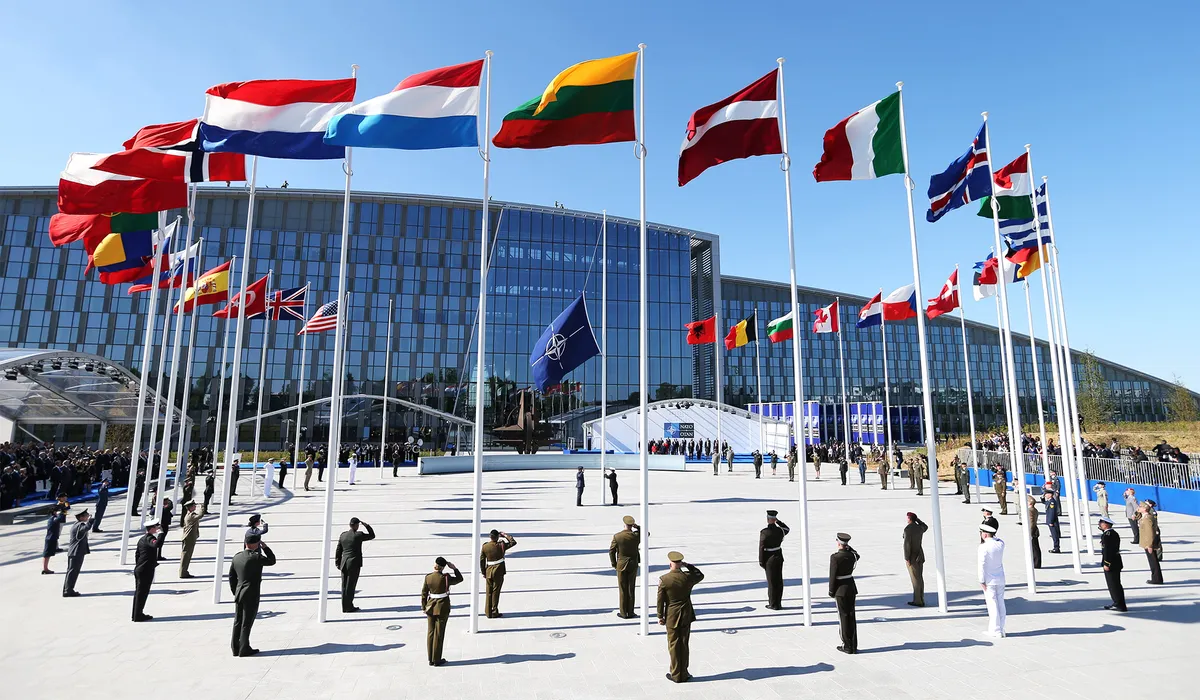
NATO’s internal cohesion is threatened as member states diverge on military support for U.S. actions in Iran. The alliance, originally formed to counter Russian aggression, now faces challenges in maintaining unity among its members.
U.S. President Donald Trump has called upon NATO allies to support military efforts in Iran. However, Spain, Italy, and France have denied U.S. aircraft the use of their bases for attacks on Iran. This refusal highlights a growing rift within NATO regarding military cooperation.
NATO Secretary General Mark Rutte visited Türkiye on April 21, 2026, to discuss defense cooperation amid these tensions. “Türkiye has gone through a defence industrial revolution,” Rutte stated, emphasizing the country’s evolving role in European security.
Germany plans to increase its military personnel by 50% over the next decade. This move reflects a broader trend of rising defense spending among NATO members, yet it raises questions about the alliance’s collective defense capabilities.
The invocation of NATO’s collective defense clause, Article V, during the war against Afghanistan marked a significant moment in the alliance’s history. But now, with diverging views on military action, some observers worry about the future of NATO expansion and its effectiveness.
Trump criticized NATO members, saying, “We will protect them, but they will do nothing for us.” His comments reflect frustration with perceived imbalances in defense contributions among allies. The alliance operates on a consensus model where the founding documents provide no path for the forced removal of a sovereign member.
Spain’s Prime Minister Pedro Sánchez reaffirmed his country’s commitment to NATO, stating, “Spain is a reliable member within NATO.” Nevertheless, Spain’s refusal to allow U.S. operations signals a potential shift in how member states prioritize their national interests over collective obligations.
As NATO navigates these internal divisions, officials remain uncertain about future military cooperation strategies. The situation underscores the delicate balance between national sovereignty and collective defense that has defined the alliance since its inception.