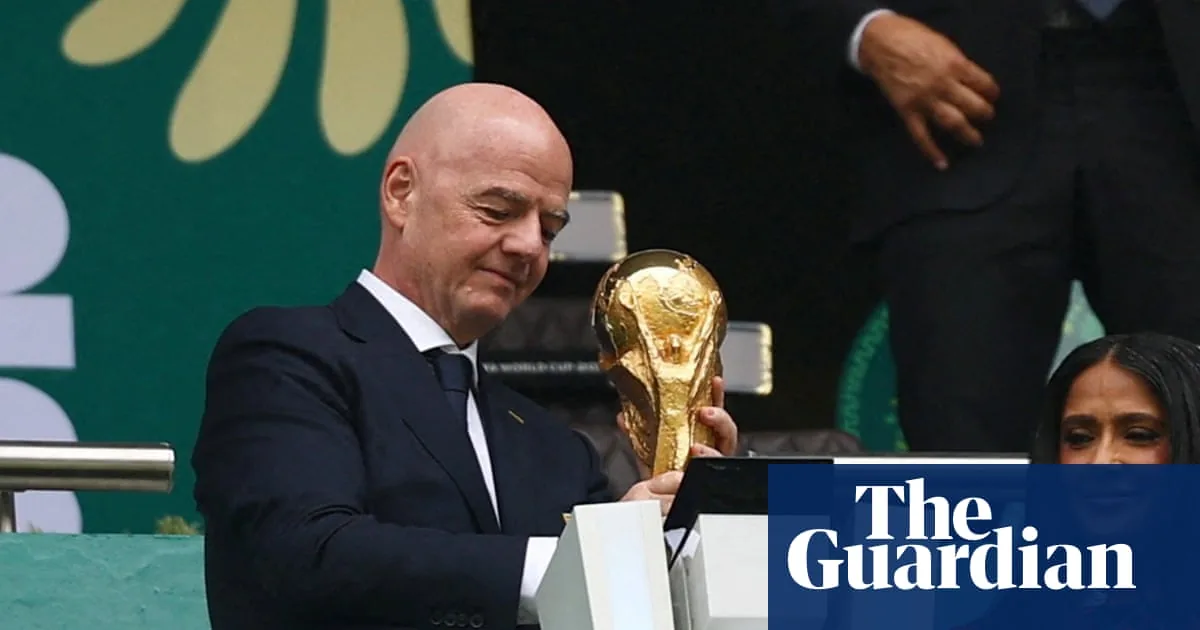
The Norwegian Football Federation (NFF) has called for Fifa president Gianni Infantino to resign. This follows his attempt to sell stakes in the World Cup to private investors. In contrast, Mexico and Argentina have expressed their support for Infantino.
Lise Klaveness, president of the NFF, stated on Friday that Infantino lacks the institutional trust needed to govern Fifa effectively. She emphasized that there is no turning back for him and that international football cooperation is in trouble. Klaveness indicated that the NFF would ask Infantino to resign during their dialogue with Fifa.
Divisions Among Football Federations
Norway’s stance goes further than other European football associations, including England, Wales, Croatia, and Albania. These nations have withdrawn their support for Infantino but have not explicitly called for his resignation. Klaveness, a qualified lawyer, highlighted various concerns raised by the Norwegian FA during her four-year tenure. These concerns include questions about tournament awarding, the inaugural Fifa peace prize awarded to US President Donald Trump in December, and the overturning of a ban for American forward Folarin Balogun following a phone call from Trump.
Meanwhile, the Mexican Football Federation (FMF) has supported Infantino’s leadership, despite its regional governing body, Concacaf, calling for a “comprehensive reckoning” of his presidency. Concacaf, which oversees football in North and Central America and the Caribbean, had criticized Infantino’s aborted plans to sell World Cup stakes to private investors. However, Mexico, a co-host for the 2026 World Cup, has backed Infantino, stating that the FMF supports his leadership in promoting football development through institutional strengthening.
This sentiment was echoed by Conmebol, South America’s governing body, which stated it would reject any attempt to remove Infantino without a vote involving all 211 Fifa members. Conmebol, however, did express concern about repeated unilateral actions taken without dialogue. The football association of 2026 World Cup runners-up Argentina also praised Infantino for acknowledging and apologizing for his “errors,” describing his decade-long tenure as focused on global football development and institutional strength.
The Confederation of African Football (CAF) has unanimously backed Infantino. However, he faces opposition from Uefa, European football’s governing body, and Concacaf. Uefa has indicated that European teams could still boycott the World Cup as its conditions have not been met, despite Infantino’s plan being withdrawn. Uefa had previously stated a loss of confidence in Infantino, labeling the Fifa Forward Enterprise (FFE) proposal as a “shabby, back room, opaque deal.”
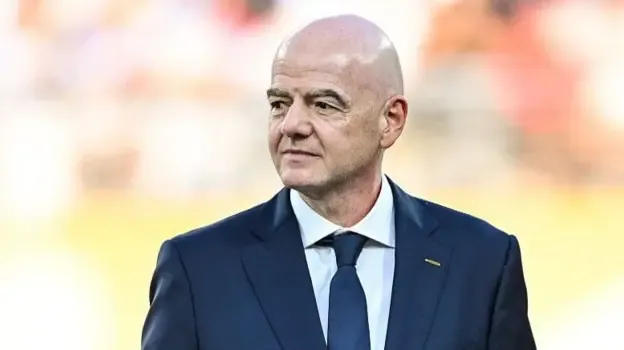
Infantino’s Re-election Prospects
The English FA has formally withdrawn its support for Infantino, with Wales, Albania, and Croatia also among the individual associations that have done so. Concacaf described Infantino’s proposal as “a symptom of leadership that has stopped putting football first,” highlighting a pattern of missteps. However, unlike Uefa, Concacaf did not explicitly state a loss of confidence in the Fifa president.
Before Infantino withdrew his proposal, the Asian Football Confederation (AFC) had expressed solidarity with Uefa and Concacaf in opposing the plans. Ordinarily, Infantino would not be eligible for re-election in March, as the maximum tenure under Fifa statutes is three four-year terms. However, after replacing Sepp Blatter in 2016, his first term lasted only three years, which he successfully argued should not count, allowing him to stand again. Infantino was re-elected unopposed in 2019 and 2023.
Now, Uefa and other opponents must find a candidate to challenge him. The deadline for nominations, requiring at least five letters of support from member associations, is 18 November. The election, conducted by secret ballot, will take place at the 77th Fifa Congress in Rabat, Morocco, on 18 March.
If two candidates stand, a simple majority of the 211 member associations is needed to win. If three or more candidates are present, 75% of votes are required for an outright win; otherwise, the candidate with the fewest votes is eliminated, and another vote is held until only two candidates remain, at which point a simple majority decides the outcome.
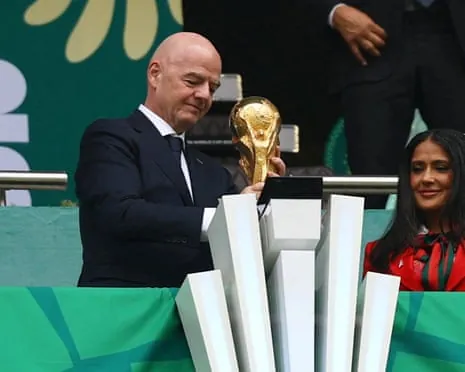
Regional Support and Opposition
Infantino has seven months to solidify his support base. He has historically achieved this by traveling globally and meeting with various football officials. When elected in 2016, Infantino stated that Uefa provided him with a budget of €500,000 (£430,000) to fund flights for lobbying member associations. Following a recent meeting of the Fifa management board in Rabat, Infantino traveled to South America for the inauguration of Colombian president Abelardo de la Espriella.
Another crucial tool for Infantino is the funding provided to the 211 member associations, which has helped build loyalty worldwide, particularly among developing nations that cannot afford extensive football development. The latest iteration of Infantino’s investment program, Fifa Forward 3.0, concludes in December. This program has provided all national associations with up to $8m (£5.94m) in the latest four-year cycle, representing a 30% increase from the previous cycle. The announcement of Fifa Forward 4.0 may further increase funding levels.
Outside of Europe, Infantino continues to receive significant support and would likely be the favorite to win an election. Uefa, with 55 members, remains Infantino’s strongest critic, though some members might not vote against him. Africa, with 54 members, has reaffirmed its unanimous support. Asia, with 46 members, joined Uefa in criticizing FFE but did not issue a statement after the plan was aborted; only Jordan, which did not support Infantino previously, has stated it will not vote for him.
Concacaf, with 35 members, has strongly criticized Infantino, but Mexico has already broken ranks to back him. The extent of support from other small nations in the region, which benefit from Infantino’s funding, remains uncertain. Oceania, with 11 members, will issue a statement after a meeting next month, but its president, Lambert Maltock, previously lauded Infantino as a “leader par excellence” for his investment in grassroots football. South America, with 10 members, issued a statement indicating potential withdrawal of support if similar issues recur, but Infantino can still count on Conmebol, with Argentina and Paraguay publicly backing his re-election.
The Royal Dutch Football Association (KNVB) has confirmed a loss of confidence in Infantino’s leadership, stating that the process has fundamentally eroded trust. The Romanian Football Federation (FRF) rejected the sell-off proposal as a “dangerous initiative to turn football into a private asset,” and is withholding support for Infantino’s re-election pending further clarification. Germany and Denmark had already opted against endorsing Infantino earlier in the year. Prince Ali bin Hussein, president of the Jordanian Football Association, accused Fifa of blackmail, alleging offers of assistance in exchange for his endorsement following Infantino’s withdrawal from the World Cup stake sale proposal, citing an eight-month wait for prize money due since December for reaching the Arab Cup final in Qatar.
The election is scheduled for 18 March in Rabat, Morocco.
Source: bbc.com