Kristi Noem removed as DHS Secretary
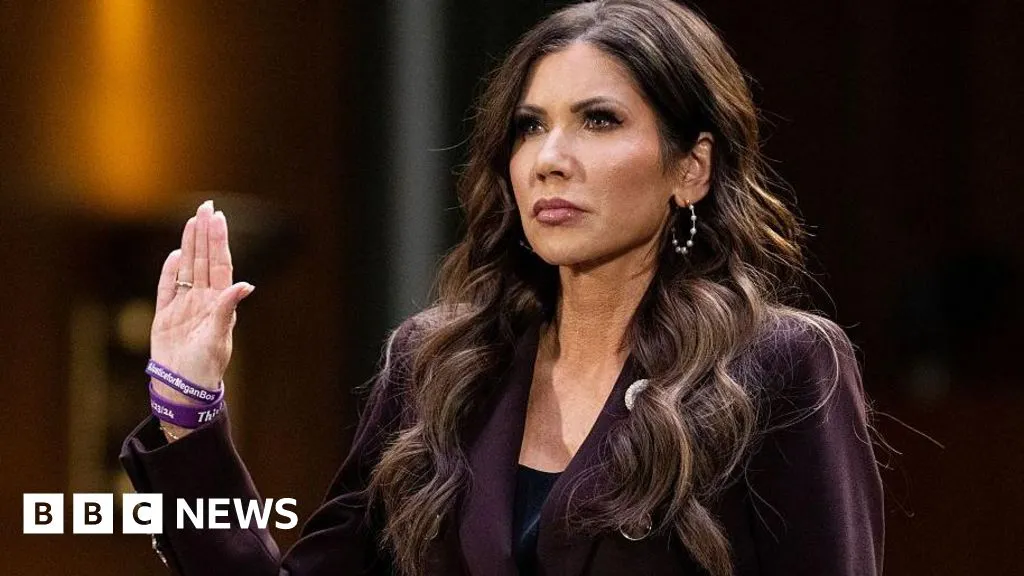
Kristi Noem has been removed from her position as Secretary of the Department of Homeland Security (DHS) by President Donald Trump, marking a significant shift in the administration’s approach to immigration enforcement. Following a two-day congressional hearing where she faced bipartisan criticism, Noem’s removal comes as she will now serve as a special envoy for the Shield of the Americas, a new U.S. national security initiative focused on the Western Hemisphere.
During her tenure at DHS, Noem oversaw Trump’s immigration enforcement policies, which have been contentious. Notably, two U.S. citizens were fatally shot by federal agents during operations she oversaw, raising concerns about the administration’s tactics. Additionally, Noem faced backlash for a $220 million border security advertising campaign that prominently featured her, further complicating her standing within the administration.
Trump, while commenting on Noem’s removal, stated, “I never knew anything about it,” and acknowledged her contributions, saying, “Kristi Noem has served us well, and has had numerous and spectacular results (especially on the Border!).” Her handling of emergency responses through FEMA also drew criticism, adding to the pressures leading to her dismissal.
Markwayne Mullin has been nominated to replace Noem as DHS Secretary. If confirmed, Mullin, a citizen of the Cherokee Nation, would make history as the first Native American to lead the department. At 48 years old, Mullin brings a unique background, including a professional MMA record of 5-0, to the role.
Prior to her appointment, Noem described the situation at the U.S.-Mexico border as a “war zone,” emphasizing the challenges faced by the administration. Her removal marks the first instance of a Cabinet member being dismissed since Trump’s second term began, highlighting the evolving dynamics within the White House.
As Noem transitions to her new role, observers are keen to see how the Shield of the Americas initiative will be implemented and what impact it will have on U.S. foreign policy in the region. Details remain unconfirmed regarding the specific responsibilities she will undertake in her new position.
In the wake of these changes, the political landscape surrounding immigration policy continues to be a focal point for both parties, with ongoing debates about enforcement strategies and border security measures.