Introduction
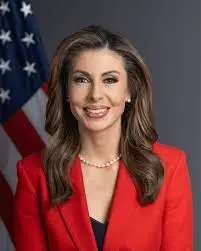
Morgan Ortagus has emerged as a significant voice in U.S. politics, particularly known for her contributions to foreign policy and international relations. With a background that spans military service, government roles, and private sector expertise, her influence is becoming increasingly relevant in contemporary political discourse. As debates around diplomacy and national security continue to dominate headlines, understanding Ortagus’ work and perspectives offers valuable insight into the future trajectory of U.S. governance.
Background and Career
Born on July 10, 1983, in Auburndale, Florida, Morgan Ortagus earned a bachelor’s degree from the University of Florida and a master’s degree from Johns Hopkins University. Her career began in the U.S. Intelligence community, where she served in various capacities, eventually leading to a role as a spokesperson for the U.S. Department of State under Secretary Mike Pompeo. In this position, she was pivotal in shaping communication strategies regarding U.S. foreign policy and engaging with international media.
In 2020, Ortagus ran for a congressional seat in Tennessee’s 5th District, aiming to bring a fresh perspective to the political landscape. Although she lost in the primary election, her campaign highlighted her dedication to issues like national security, health care, and veteran affairs, resonating with a broad base of voters.
Recent Developments
Recently, Ortagus has been active in addressing key global issues, focusing on the impact of foreign policy in the wake of major geopolitical shifts. She has publicly discussed the importance of the United States maintaining strong alliances while balancing complex relationships with nations such as China and Russia. Her statements often reflect a commitment to promoting democratic values and human rights on the global stage.
Conclusion
As Morgan Ortagus continues to carve out her niche in American politics, her contributions and status as a prominent commentator on international relations are likely to grow. Observers and constituents alike should pay close attention to her evolving role and the potential implications for U.S. foreign policy. With her unique combination of experience and educational background, Ortagus represents a new generation of leaders who are shaping the future of political dialogue in the United States.