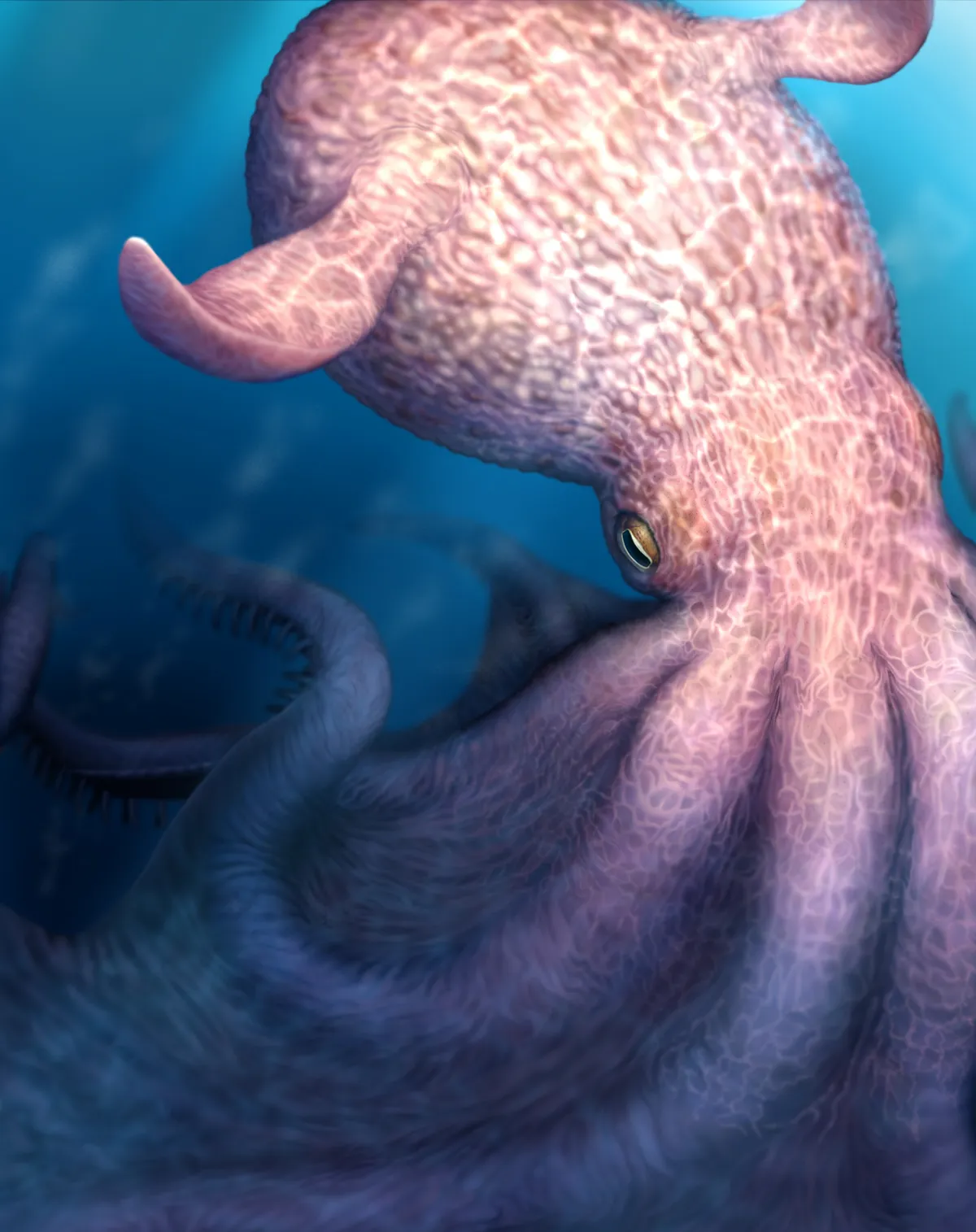
New research reveals that giant octopuses were apex predators in ancient marine ecosystems during the Cretaceous period, around 100 million years ago. This finding challenges previous assumptions about their role in these environments.
Fossil jaws indicate that these octopuses were enormous predators, with some species estimated to reach lengths of up to 19 meters. The study identified two species of extinct finned octopuses: Nanaimoteuthis jeletzkyi and Nanaimoteuthis haggarti. The jaws of these ancient creatures showed significant wear, suggesting they crushed hard-shelled prey.
Professor Yasuhiro Iba stated, “Our findings suggest that the earliest octopuses were gigantic predators that occupied the top of the marine food chain in the Cretaceous.” This new perspective highlights their importance in ancient ecosystems.
The largest jaw discovered was substantially bigger than any modern octopus jaw. This discovery supports the idea that invertebrates could evolve into giant, intelligent apex predators. The research extended the known history of finned octopuses by roughly 15 million years.
The study utilized digital fossil mining to uncover previously hidden jaws in rock samples. Experts like Adiel Klompmaker remarked, “These krakens must have been a fearsome sight to behold.” The animals repeatedly crushed hard prey such as shells and bones, indicating their formidable feeding strategies.
While this research sheds light on ancient cephalopod behavior, uncertainties remain about other aspects of their ecology. For instance, how these giant predators interacted with other marine life is still unclear. Neil Landman commented, “It’s a big old planet, so we have lots to look at to piece together the marine ecosystem through time.” Further studies are expected to explore these interactions and refine our understanding of Cretaceous marine life.